Common Plants & Their Traditional Uses: Tulsi, Aloe Vera, Ashwagandha, Pippali & Tamalpatra
Explore the traditional uses, cultural significance, botanical identities, and modern research surrounding Tulsi, Aloe Vera, Ashwagandha, Pippali, and Tamalpatra. Learn how these Indian plants have been used in Ayurveda, cooking, skincare, and household traditions, along with important guidance for responsible use.
Common Plants & Their Traditional Uses: Tulsi, Aloe Vera, Ashwagandha, Pippali and Tamalpatra
Plants have been part of human life for thousands of years. Long before modern laboratories and pharmaceutical medicines, communities observed nature closely and learned how particular leaves, roots, fruits, seeds, and flowers were traditionally used. In India, this knowledge became closely associated with Ayurveda, household traditions, food practices, and cultural rituals.
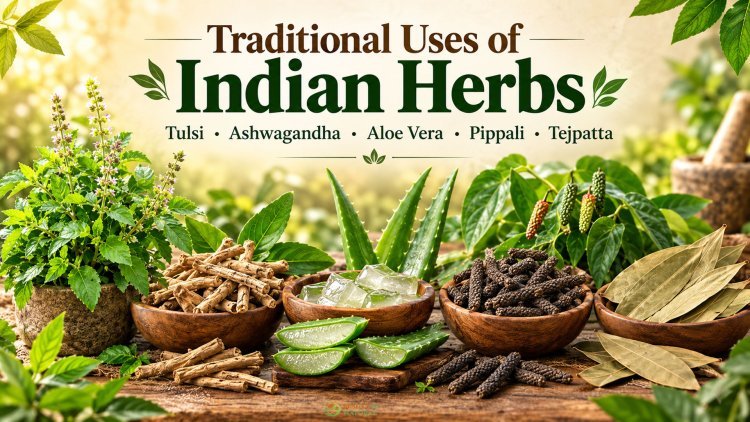
Among the many plants found in Indian homes and traditional practices, Tulsi, Aloe Vera, Ashwagandha, Pippali, and Tamalpatra are especially well known. Each has a long history of traditional use and a distinctive botanical identity.
It is important to remember that traditional use is not the same as scientifically proven medical treatment. Modern research has investigated several of these plants, but evidence varies considerably depending on the plant, preparation, dosage, and health condition. Herbal products can also interact with medicines or be unsuitable for certain people. Therefore, medicinal use should be approached carefully and professional medical advice should be sought for health conditions.
1. Tulsi — Holy Basil / तुलसी (Ocimum tenuiflorum)
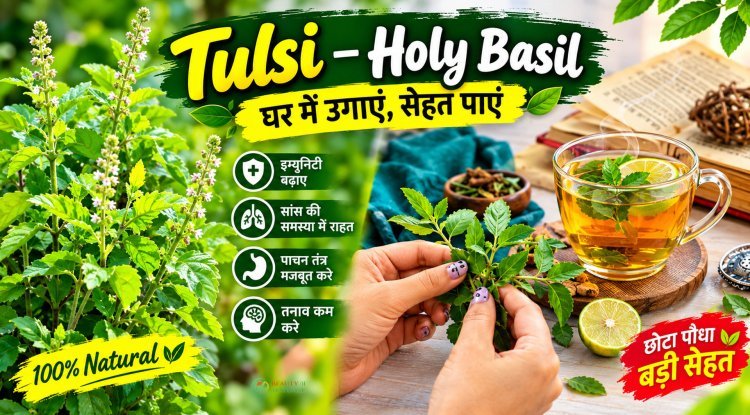
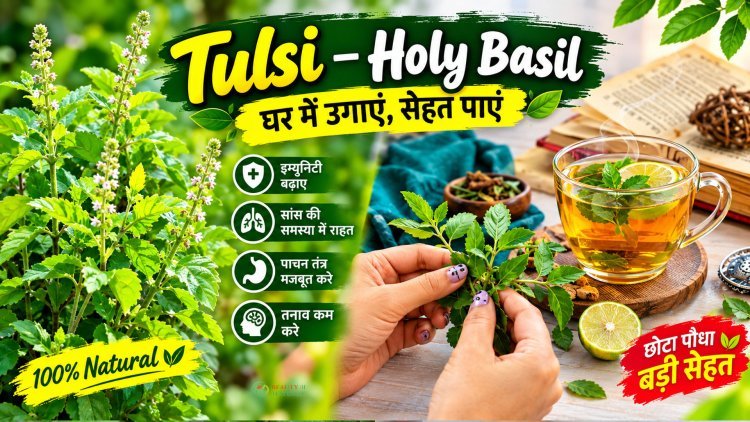
Tulsi, scientifically known as Ocimum tenuiflorum (also commonly called Ocimum sanctum), is one of the most culturally important plants in India. It is often called Holy Basil in English.
Tulsi is traditionally grown in courtyards, balconies, gardens, and near entrances of Indian homes. In Hindu traditions, it has an important cultural and religious significance and is commonly associated with daily worship.
Traditional uses of Tulsi
For generations, Tulsi leaves have been used in household preparations, particularly during seasonal changes. Fresh leaves are sometimes consumed directly or prepared as an herbal infusion.
Traditional practices have associated Tulsi with:
- Supporting respiratory comfort
- Traditional relief during coughs and colds
- Supporting digestion
- Herbal teas and household beverages
- General wellness
- Traditional practices involving stress and relaxation
- Religious and ceremonial purposes
Tulsi tea is commonly prepared by steeping fresh or dried leaves in hot water. Some traditional preparations combine Tulsi with ingredients such as ginger, black pepper, honey, or other herbs.
Tulsi and traditional Indian culture
Tulsi is unusual because its importance extends beyond its traditional herbal applications. It is deeply integrated into Indian household culture.
The Tulsi plant is often maintained as a living household plant, making it both a botanical and cultural symbol. In traditional settings, people may water the plant, light a lamp near it, and use its leaves in religious offerings.
What does modern research say?
Researchers have studied Ocimum tenuiflorum for various biological properties, including antioxidant and antimicrobial activity. However, laboratory findings do not automatically mean that consuming Tulsi can prevent or treat a particular disease in humans.
Therefore, Tulsi is best understood as a plant with a long traditional history and promising areas of scientific investigation, rather than a substitute for medical treatment.
2. Aloe Vera — घृतकुमारी (Aloe vera)
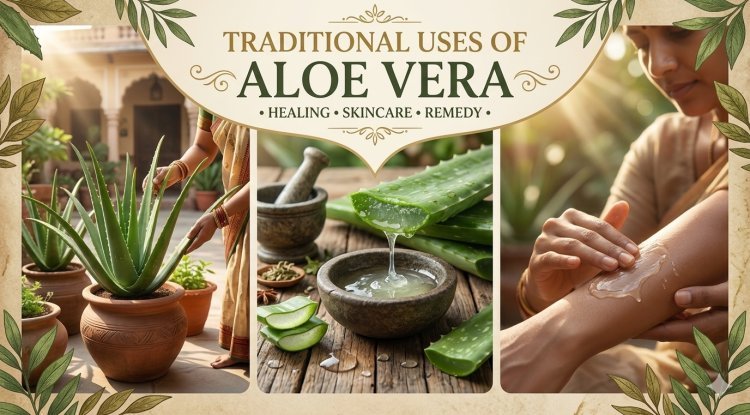
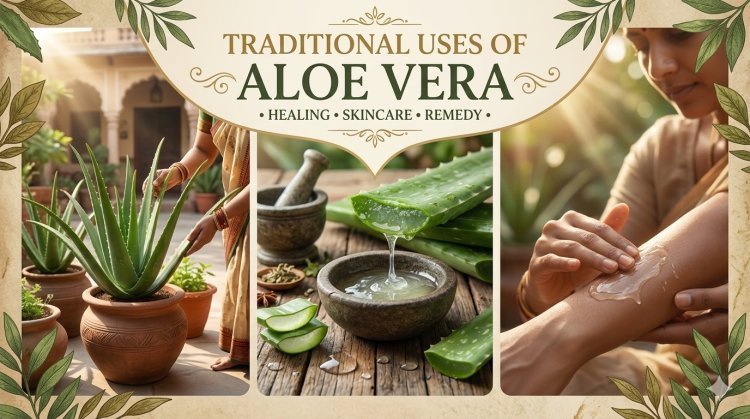
Aloe Vera, known in Ayurveda as Ghritkumari (घृतकुमारी), is a succulent plant recognized by its thick, fleshy leaves containing a clear gel.
Because Aloe Vera can tolerate relatively dry conditions, it is widely grown in homes and gardens. Its thick leaves store water, allowing the plant to survive periods of limited rainfall.
Traditional uses of Aloe Vera
Aloe Vera has a long history of traditional use in different cultures. The clear inner gel has traditionally been applied to the skin for soothing and moisturizing purposes.
Traditional household uses include:
- Skin moisturization
- Soothing minor skin irritation
- Traditional care of dry skin
- Hair and scalp preparations
- Use in traditional herbal preparations
- Certain traditional digestive preparations
The plant contains two different materials that should not be confused:
Aloe gel is the clear substance found inside the leaf.
Aloe latex is a yellowish substance found closer to the outer leaf and contains compounds with strong laxative effects.
This distinction is important because consuming Aloe products is not necessarily equivalent to applying Aloe gel to the skin.
Aloe Vera and skincare
Aloe Vera gel is widely incorporated into traditional and modern cosmetic products.
The gel contains a high proportion of water along with various naturally occurring compounds. Its cooling and moisturizing characteristics have made it popular in skin-care preparations.
Fresh Aloe Vera should nevertheless be used carefully. Some people can develop skin irritation or allergic reactions. Products intended for human consumption should be processed appropriately rather than simply consuming raw leaf material.
Traditional digestive use
Historically, certain Aloe preparations have been used as laxatives. However, concentrated Aloe latex should not be treated as an everyday wellness drink.
Excessive use of laxative Aloe preparations can cause abdominal discomfort, diarrhea, dehydration, and disturbances in electrolytes. Certain medicines and health conditions can also make such products inappropriate.
Thus, the traditional history of Aloe Vera is broad, but different parts and preparations have very different safety profiles.
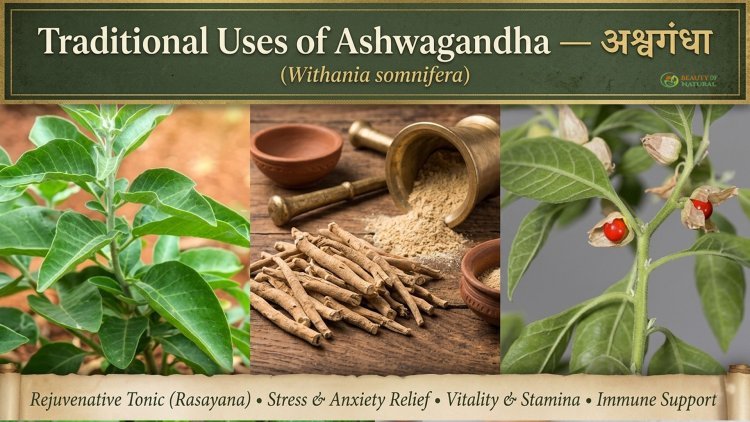
3. Ashwagandha — अश्वगंधा (Withania somnifera)
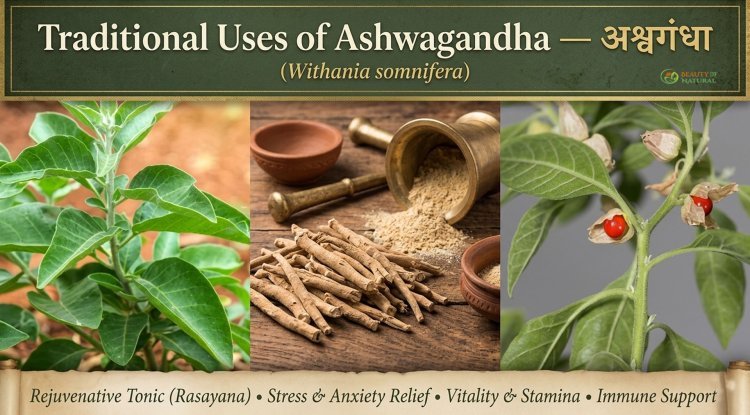
Ashwagandha, scientifically known as Withania somnifera, is one of the best-known plants associated with traditional Ayurveda.
The plant is a small shrub belonging to the nightshade family. Its roots have historically been particularly important in traditional preparations.
The name Ashwagandha is often interpreted in relation to the characteristic smell of its root and traditional descriptions of its properties.
Traditional uses
Ayurvedic traditions have used Ashwagandha as a rasayana, a category of traditional preparations associated with rejuvenation, strength, vitality, and general well-being.
Traditional uses have included:
- Supporting general vitality
- Traditional stress-related wellness practices
- Supporting physical strength
- Traditional approaches to healthy sleep
- Supporting recovery and nourishment
- Use in traditional formulations for overall wellness
Ashwagandha is commonly found today in powders, capsules, tablets, extracts, and other herbal products.
Ashwagandha and modern research
Modern scientific research has investigated Ashwagandha for areas including stress, sleep, exercise performance, and certain aspects of mental well-being.
Some clinical studies have reported potential benefits in particular situations, but results vary according to preparation, dosage, study design, and participants.
This distinction matters because a plant can have an interesting traditional history without every traditional claim being scientifically established.
Safety considerations
Ashwagandha is not automatically safe simply because it is a traditional herb.
Some people may experience digestive symptoms or other adverse effects. It may also interact with certain medications and may not be appropriate during pregnancy or for some medical conditions.
People taking regular medicines or managing a chronic health condition should consult a qualified healthcare professional before using concentrated Ashwagandha supplements.
4. Pippali — Long Pepper / पिप्पली (Piper longum)
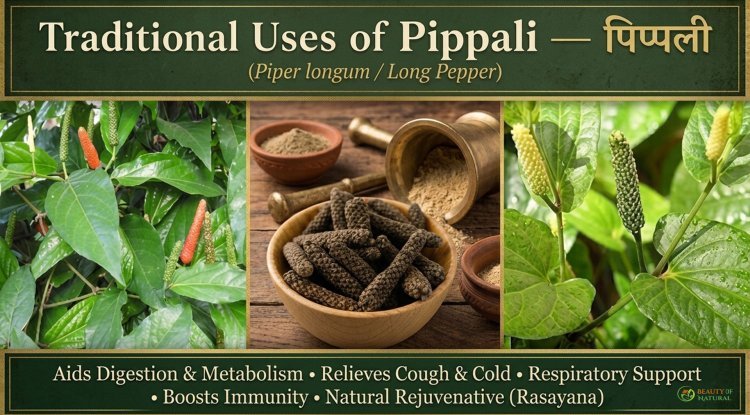
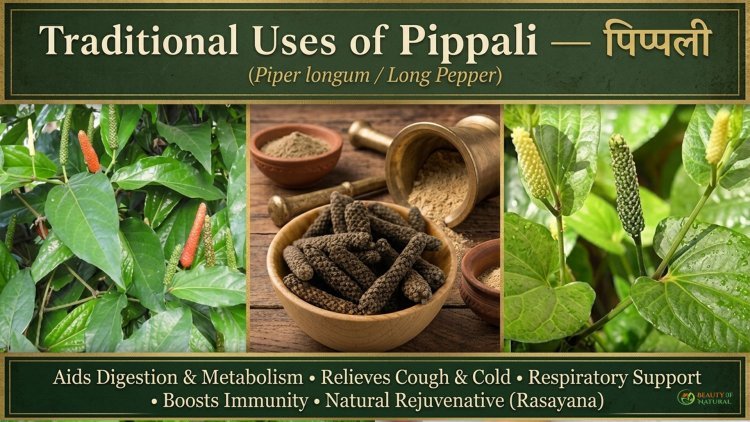
Pippali, also called Indian Long Pepper, is scientifically known as Piper longum. It belongs to the same botanical family as black pepper but is a different species.
The plant produces distinctive elongated fruit spikes that are used as a spice and traditional ingredient.
Pippali has been used for centuries in Indian culinary and Ayurvedic traditions.
Traditional uses of Pippali
In traditional practices, Pippali has been associated particularly with digestive and respiratory preparations.
Traditional uses include:
- Supporting digestion
- Traditional preparations for cough and respiratory discomfort
- Supporting appetite
- Use in warming herbal formulations
- Culinary use as a spice
- Ingredient in traditional Ayurvedic formulations
Pippali is known for its pungent and warming character. It is frequently combined with other herbs rather than used alone.
Pippali in traditional formulations
One interesting feature of Ayurveda is the use of combinations of herbs.
Pippali is an important ingredient in some classical formulations and is sometimes combined with ginger and black pepper.
The three spices are collectively associated with the traditional formulation known as Trikatu.
Traditional practitioners have historically used such combinations in preparations intended to support digestion and respiratory wellness.
Pippali and modern research
Researchers have investigated compounds in Piper longum, including piperine-related constituents and other phytochemicals.
Research has explored antioxidant, antimicrobial, anti-inflammatory, and other biological activities. However, laboratory findings should not be interpreted as proof that Pippali can cure diseases.
Another important consideration is that pepper-derived compounds may influence how the body absorbs or processes certain substances. People taking medicines should therefore be cautious with concentrated herbal extracts.
5. Tamalpatra — Indian Bay Leaf / तेजपत्ता (Cinnamomum tamala)
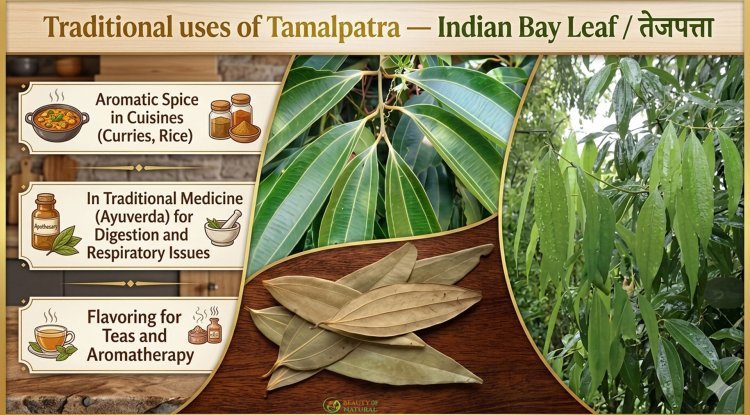
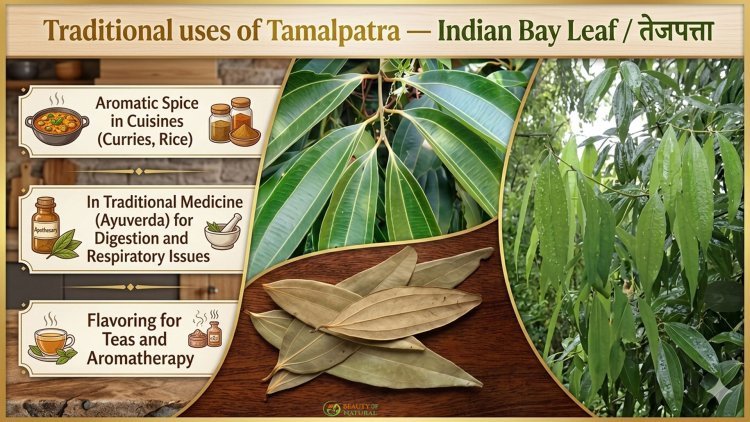
Tamalpatra, commonly called Tej Patta (तेजपत्ता) in Hindi, is an aromatic leaf traditionally used in Indian cooking.
Its botanical name is Cinnamomum tamala. It belongs to the cinnamon family, Lauraceae.
The dried leaves are particularly familiar in Indian kitchens, where they are used to add fragrance and flavor to rice dishes, curries, pulao, biryani, and various spice mixtures.
Traditional uses of Tamalpatra
Unlike some medicinal plants, Tej Patta is particularly prominent as a culinary spice.
Traditional uses include:
- Flavoring rice dishes
- Adding aroma to curries
- Use in biryani and pulao
- Inclusion in spice blends
- Traditional digestive preparations
- Use in some Ayurvedic formulations
The leaves are usually added whole during cooking and removed before serving.
Traditional digestive applications
Indian culinary traditions have long associated aromatic spices with digestion. Tamalpatra has consequently appeared in traditional preparations intended to support digestive comfort.
However, culinary use and therapeutic use are different. Adding a leaf to food does not provide the same exposure as consuming a concentrated herbal extract.
Tamalpatra and its aromatic compounds
The characteristic fragrance of Tamalpatra comes from naturally occurring volatile compounds in its leaves.
Researchers have investigated various chemical constituents of Cinnamomum tamala, including essential-oil components and polyphenolic compounds.
Scientific studies have explored antioxidant and other biological activities, but more research is required to establish specific clinical benefits in humans.
Comparing These Five Traditional Plants
| Plant | Scientific name | Common traditional association | Common form |
|---|---|---|---|
| Tulsi | Ocimum tenuiflorum | Respiratory wellness, household herbal use, cultural practices | Fresh/dried leaves, tea |
| Aloe Vera | Aloe vera | Skin care, soothing applications, traditional preparations | Gel, processed products |
| Ashwagandha | Withania somnifera | Strength, vitality, stress and sleep-related traditional use | Root powder, extracts |
| Pippali | Piper longum | Digestion and respiratory traditional formulations | Dried fruit/spice |
| Tamalpatra | Cinnamomum tamala | Culinary flavoring and traditional digestive use | Dried leaves |
How to Use Traditional Plant Knowledge Responsibly
Traditional plant knowledge is valuable because it represents generations of observation and cultural experience. At the same time, responsible use requires understanding the difference between traditional practice, scientific evidence, and medical treatment.
A plant may contain biologically active compounds, but that does not automatically mean that a homemade preparation can treat a disease.
1. Correct identification matters
Many plants have similar-looking relatives. Using the wrong species can result in ineffective or potentially harmful preparations.
Scientific names such as Ocimum tenuiflorum and Withania somnifera help distinguish plants accurately.
2. Preparation changes the effect
A fresh leaf, dried powder, tea, standardized extract, and concentrated capsule can contain very different quantities of active compounds.
Therefore, traditional food use should not automatically be compared with modern herbal supplements.
3. Natural does not always mean harmless
Plants can contain powerful chemicals. Some can interact with prescription medicines or cause adverse reactions.
This is particularly important for concentrated extracts and supplements.
4. Children require extra caution
Children have different nutritional and physiological requirements from adults. Traditional herbal preparations should not be given to children simply because they are commonly used by adults.
5. Seek professional advice for illness
If someone has persistent fever, breathing difficulty, severe pain, unexplained weight loss, infection, or another significant medical problem, traditional herbs should not replace professional diagnosis and treatment.
Bringing Traditional Plants Into Modern Life
These five plants demonstrate the remarkable diversity of traditional plant knowledge.
Tulsi represents the connection between household gardening, culture, and traditional wellness.
Aloe Vera demonstrates how a plant can be valued both for traditional skin applications and as a component of modern cosmetic products.
Ashwagandha represents the long history of Ayurvedic herbal traditions and the continuing interest of modern researchers.
Pippali shows how a culinary spice can also have an important place in traditional herbal formulations.
Tamalpatra illustrates the close relationship between food and traditional plant knowledge, with an aromatic leaf becoming an essential part of Indian cuisine.
The most useful approach is neither to dismiss traditional knowledge nor to assume that every traditional claim has been scientifically proven. Instead, we can appreciate the botany, cultural history, traditional applications, and emerging scientific research surrounding these plants while using them responsibly.
Conclusion
India's plant heritage is extraordinarily rich, and Tulsi, Aloe Vera, Ashwagandha, Pippali, and Tamalpatra are five familiar examples of how plants have been integrated into everyday life.
From the Tulsi plant growing in a household courtyard to Tej Patta adding fragrance to a traditional meal, these plants connect nature, culture, food, and traditional knowledge.
Modern science continues to investigate many of the compounds found in these plants. Some areas show interesting potential, while others require much more research. For this reason, traditional uses should be presented accurately—as traditional uses, rather than guaranteed medical treatments.
Learning about these plants can nevertheless encourage something valuable: a deeper appreciation for India's botanical diversity and the generations of knowledge surrounding it. When combined with accurate plant identification, responsible use, and evidence-based healthcare, traditional plant knowledge can remain an important part of understanding our relationship with nature.
What's Your Reaction?